


General knowledge of using electrostatic instruments
Electrostatic instruments are typically operated at high voltages (on the order of 104V) and micro-power (on the order of 10-6 coulombs) and therefore require high insulation performance. It can be said that the key to the success of electrostatic experiments is the insulation problem. The purpose of insulation is to minimize the dispersion of charge.
1. Dry: Moisture can disable many electrostatic instruments. Because water molecules (and several ions in the air) adhere to the surface of the insulation, the insulation performance is greatly reduced. This is especially true for certain hydrophilic materials. For example, when the glass is moved from an environment with a relative humidity of 50% to an environment with a relative humidity of 80%, the surface resistance is reduced to 7.5 percent. And in a classroom full of students, the relative humidity can easily reach more than 85%. That's why some instruments work well before class, and they don't work well in class. The easiest way to dry the environment is to ventilate.
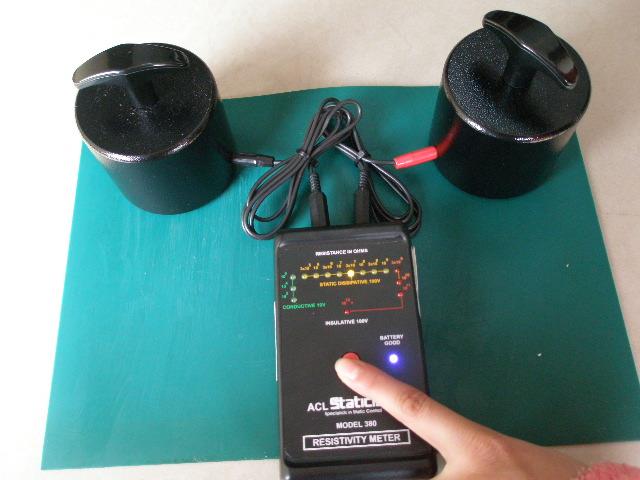
It is generally believed that a relative humidity of not more than 70% is a condition for the normal operation of an electrostatic device. Ventilation often does not guarantee this, which requires drying the surface of the instrument. No matter what heat source is used for drying, the surface temperature of the instrument should not exceed 50 °C (hand feels hot but not hot). The method of ventilating while baking can be adopted to make the instrument dry as soon as possible and to shorten the drying time as much as possible.
2. Cleaning: Dust, fiber and perspiration on the surface of the instrument can cause many tiny tips that allow charge to flow directly from the tip through the corona discharge and into the air. Therefore, the surface of the instrument should be carefully cleaned during use and should not be touched directly by hand.

3. When the instrument is used together with a high-voltage power supply such as a motor, it should be kept away as far as possible to prevent the excessive gas ions caused by the high-voltage power supply during the discharge process from affecting the charged state of the instrument.
4. In the experiment, if it is necessary to connect two instruments with conductors, it is best to use an electroscope connecting rod or a discharge fork. If the non-use wire is not available, the wire should also be hung with an insulated wire such as nylon wire.
5. When observing the instrument, do not exhale the instrument.
6. Polymer insulation materials are prone to aging, with the most obvious effects of ultraviolet and infrared radiation. The aging of hard rubber products firstly forms a green-brown film on the surface, at which time the insulation against static electricity has failed. Gently wipe the film with a fine sandpaper dampened with alcohol and reuse. The aging of plastics is brittle and cannot be repaired. Therefore, the instrument should be kept in an environment that avoids direct sunlight and away from heat.

7. Choice of insulating materials: The root cause of the poor use of a considerable number of electrostatic devices is the improper selection of insulating materials or improper handling. Such as: bakelite (phenolic resin) is an excellent insulating material in low-voltage electrical appliances, but not suitable for use in electrostatic instruments. Because bakelite powder often contains traces of metallic impurities. Some materials have good insulation properties, but some dyes are added to the aesthetics or to distinguish parts during the manufacturing process, which tends to reduce the insulation properties of the material. Therefore, in addition to selecting excellent insulation properties, the insulating material of the electrostatic device should not be dyed.
Among the commonly used insulating materials, polystyrene and hard polyvinyl chloride have poor mechanical strength and are easy to age; low-pressure polyethylene and polypropylene have good toughness, but are also easy to age; glass is resistant to aging, but the surface is damp (hydrophilic); Although PTFE and industrial plexiglass are more expensive, they have better performance in all aspects. It is an ideal electrostatic insulation material.