


Performance requirements of anti-static clean clothes


1. Antistatic performance
Because the fabric of anti-static clean clothes is made of poor conductors such as polyester or polyamide filament fibers, static electricity will be generated during clothing and activities, so this type of fabric must be processed with anti-static. At present, there are mainly three methods to improve the conductive performance of clothing: one is to mix conductive fibers during spinning, which are generally metal fibers or organic antistatic fibers; the other is to woven conductive yarns into the fabric. The material of the conductive yarns is mainly It is carbon and synthetic fiber, and has certain characteristics such as resistance to washing, dyeing, and ultraviolet light. The third is the chemical modification of the fiber, that is, adding an antistatic agent inside the polymer.
2. Dust-free
The fabric of anti-static dust-free clothing is generally not woven with short fibers (such as cotton fibers), because its dust-generating properties are not conducive to its anti-static and dust-proof requirements whether it is in the production process or in the use process. Cotton products and blended products have a lot of wool yarn on the surface. Generally, dust will be generated as long as there is a certain movement or a slight air flow. Among them, the yarn and dust that fall due to sanding account for the majority. Clothing made of synthetic fiber filaments has less dusting performance than cotton or cotton blended fabrics, so synthetic fiber filaments are generally used in anti-static clean clothes.

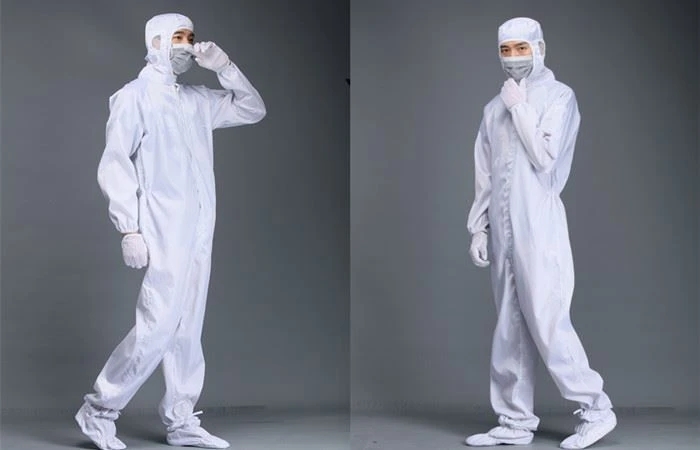
3. Filterability
Anti-static dust-free clothing also requires the ability to filter the fine dust generated in the dust-proof clothing, which requires that the dirt generated by the human skin and the dust generated by the underwear are removed without affecting the moisture and air permeability required by the human body. Filter in the environment of the garment.
The barrier of anti-static dust-free clothing fabric to human body dust
4. Comfort
The traditional anti-static dust-free clothing feels very stuffy and has poor air permeability. Wearing poorly air-permeable clothing in a hot environment will affect the body's evaporation and heat dissipation. The humidity in the micro-environment in the clothing is getting higher and higher, and the thermal stress in the clothing becomes higher than the thermal stress of the external environment, resulting in unbearable thermal strain. In some occasions with stricter functional requirements, the thermal and wet comfort requirements of anti-static dust-free clothing are often overlooked by people. With the development of high technology, the demand for comfort has gradually gained attention. As an important part of clothing function, clothing comfort reflects the human body’s acceptance of clothing and directly affects the performance of the wearer’s work efficiency.
5. Durability
Anti-static dust-free clothing should be used repeatedly, usually at least once a week. Therefore, it is required to be easy to wash, iron-free, wash-resistant, and have a certain strength. The strength control index includes two types of fabric fastness and stitch fastness.