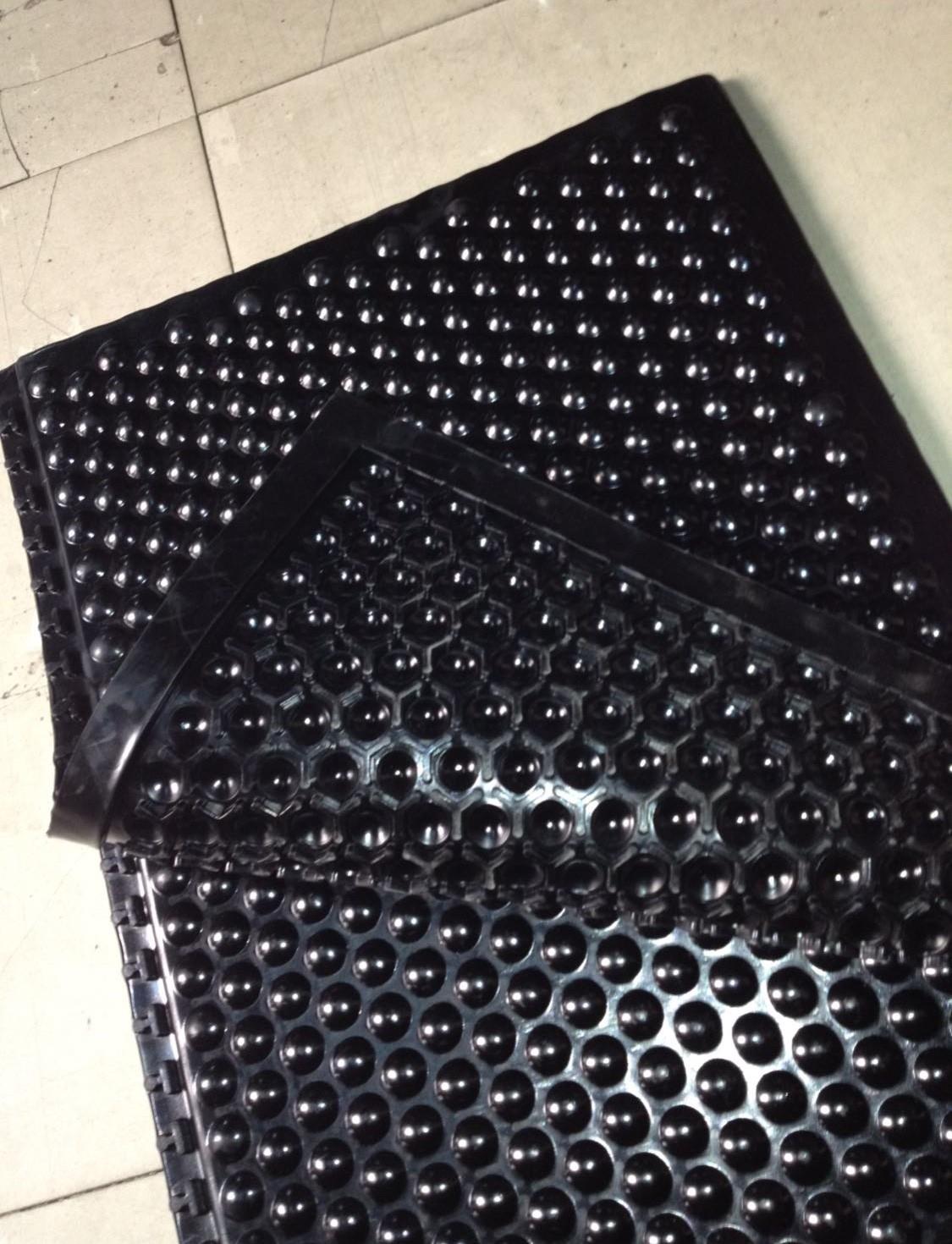
Conductive static and anti-static rubber pads (table mats, floor mats) are suitable for black powder, pyrotechnics, electric fireworks, ammunition charge assembly, civil explosive equipment, fireworks, electronic components, electronic instruments, petroleum liquefied gas The production of workshops and warehouses in tank stations, electronic semiconductor devices, electronic computers, electronic communication equipment and integrated circuit microelectronics industries, such as conductive rubber sheets, anti-static rubber sheets and countertops, are designed to eliminate static buildup of the human body and the environment. Take necessary electrostatic safety precautions to prevent static hazards and accidents.
The function of paving static electricity, anti-static rubber sheet (table mat, floor mat) and work surface is to effectively discharge static electricity on the human body, tooling, equipment and materials into the earth, and eliminate the static hazard of human body and environment. Prevent fire and explosion accidents caused by electrostatic discharge in production sites of inflammable and explosive products; prevent breakdown of components and components due to electrostatic discharge in electronic product production sites; relieve electrostatic shock and mental burden caused by electrostatic discharge of operators .
Anti-static pad laying
There are two methods for laying static electricity and anti-static rubber mats (table mats and floor mats). The floating shop is to lay a 2-5mm thick rubber plate directly on the ground, which is flexible and simple to lay, but the gap between the rubber sheets is easy to accumulate dust. Paste is to 3-5mm thick rubber plate with static conductive rubber liquid on the ground, rubber plate joints can be used 1.2X1000X10000mm thin rubber plate with a paper cutter to cut into a width of 30-50mm rubber strip, brushing static rubber liquid Paste on the gap surface of the rubber sheet joint. You can also use a paper cutter (or special tool) to cut the 5mm thick rubber plate straight into the positive and reverse slopes and slightly light the hair. Apply the static rubber liquid to lap and paste.
Ground floor requirements
The wooden floor, asphalt floor, second floor and above and above are on the insulating floor. Before the rubber sheet is laid, the copper sheet should be placed on the ground. The copper sheet material is generally selected from the copper strip and the copper sheet is attached to the ground. Packed into a long square grid with horizontal and vertical intersections, the size and quantity of copper patch placement can be determined according to the needs of the production workshop and warehouse. The mounted copper sheets are fixed and reliably connected to the electrostatic grounding branch (or trunk) to provide static electricity. Leakage channel. Non-insulated ground such as cement floor and terrazzo floor on the first floor, no need to place copper sheets, rubber sheets can be directly laid on the ground.
Anti-static rubber pad and ground paste precautions
1. The floor and rubber sheet should be free of dust, oil, moisture, and must be clean and dry;
2, before the paste with 120 ° gasoline will be cleaned by the paste surface, dry and then apply rubber liquid;
3, the ambient temperature requires 25 ° C -42 ° C, the relative humidity is not higher than 60%, the general good;
4, the rubber sheet bonding surface is best to use a rough grinding wheel, coarse sandpaper, rafts and other minor hair (adhesive surface 30-50mm edge must be hair);
5, the rubber liquid must be brushed twice on the surface of the paste and the rubber board, the first time drying for 20-30 minutes, the second time drying until the micro-adhesive hand can be pasted;
6. If the rubber liquid is too thick, it is inconvenient to construct. It can be diluted with 10-20% of rubber liquid and mixed evenly before mixing.
7. After the rubber sheet is pasted with the ground, it is rolled over 5 times with a roller of more than 5 kg;
8. During construction, attention should be paid to ventilation and fire prevention;
9. In the process of using the anti-static rubber mat, it is found that it can be subsidized and repaired by the above-mentioned pasting method when it is dried and crimped due to mechanical operations and the like.
Resistance measurement of anti-static rubber pad
The measuring instrument is an insulation resistance tester with a DC open circuit voltage of 500V and a short-circuit current of 5mA. The measuring electrode is made of a cylindrical or standard stainless steel material with a diameter of 60 ± 2 mm and a weight of 2 ± 0.2 kg. The measuring electrode must be treated with oxidation.
1. Place two measuring electrodes separated by 1m on the ground, connect the two terminals of the meter to the electrodes, and measure the resistance between the poles;
2. Place a measuring electrode on the ground, connect the terminal of the meter to the electrode, and connect the other terminal to the grounding grid of the workshop and the warehouse (if there is no grounding net, it can be connected to the water-filled water pipe), and measure the point. Ground resistance value;
3. Select at least 5 measuring points for each workshop and warehouse. The measuring points should be selected at the place where the production workers operate and frequently move, and should be 1 m away from the grounding body;
4. Regardless of the inter-electrode resistance value or the polar resistance value, the arithmetic mean value is taken;
5. The ground resistance of the anti-static rubber pad is ≤5X10⁴Ω or 5X10⁴-106Ω; the ground resistance of the anti-static rubber plate should be in the range of 106Ω-109Ω.