


Basic Safety Precautions for Using Anti-Static Gloves
Anti-static gloves are designed for personnel working in industries such as electronics, semiconductors, and integrated circuit manufacturing. They prevent damage to electronic components caused by static electricity generated through friction during handling. Operators should observe the following precautions when using anti-static gloves:

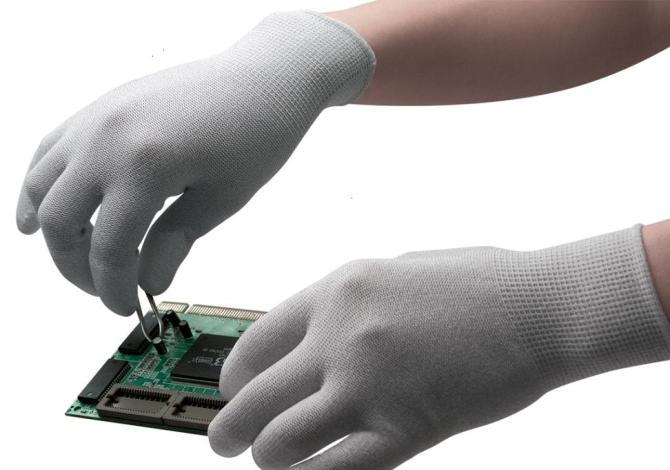
1. When handling electrostatic discharge (ESD) sensitive components, avoid physical movements that generate static electricity-such as removing your anti-static gloves-in the immediate vicinity.
2. Personnel handling ESD-sensitive components must wear anti-static gloves. The gloves should be tested periodically using a surface resistance tester. Additionally, operators must wear anti-static work garments. Both the gloves and the garments must be made from polyester fabric containing conductive fibers; materials prone to generating static electricity-such as standard synthetic fibers, plastics, or rubber-must not be used.
3. Operators must receive training on ESD protection and undergo competency testing and certification. Individuals who have not completed such training are not permitted to assemble or package electronic components.
4. Before putting on anti-static gloves, ensure your fingers are clean. Use alcohol or an alcohol-water solution for cleaning; do not use materials prone to generating static electricity, such as rubber or chemical fibers.
5. In areas where direct human grounding (e.g., via wrist straps) is not possible, operators must ensure they are properly grounded before removing sensitive electronic components from their packaging. This prevents static electricity carried by the human body from damaging the components due to an inability to discharge safely.