


Classification of Anti-static PVC Flooring
1. **By Structure:** There are three main types: multi-layer composite, homogeneous (through-body), and semi-homogeneous. Multi-layer composite PVC flooring consists of multiple layers-typically four to five-pressed together; these generally include a wear layer (with UV treatment), a printed film layer, a fiberglass layer, an elastic foam layer, and a base layer. Homogeneous PVC flooring is uniform throughout its thickness, meaning the pattern and composition remain consistent from the surface down to the bottom.
2. **By Form:** There are two types: sheet flooring (in rolls) and tile flooring. Sheet flooring comes in rolls and is relatively flexible; common widths include 1.5m, 1.83m, 2m, 3m, 4m, and 5m, with roll lengths of 7.5m, 15m, 20m, and 25m. Total thickness ranges from 1.6mm to 3.2mm (for commercial flooring; sports flooring can be thicker, reaching 4mm, 5mm, or 6mm).
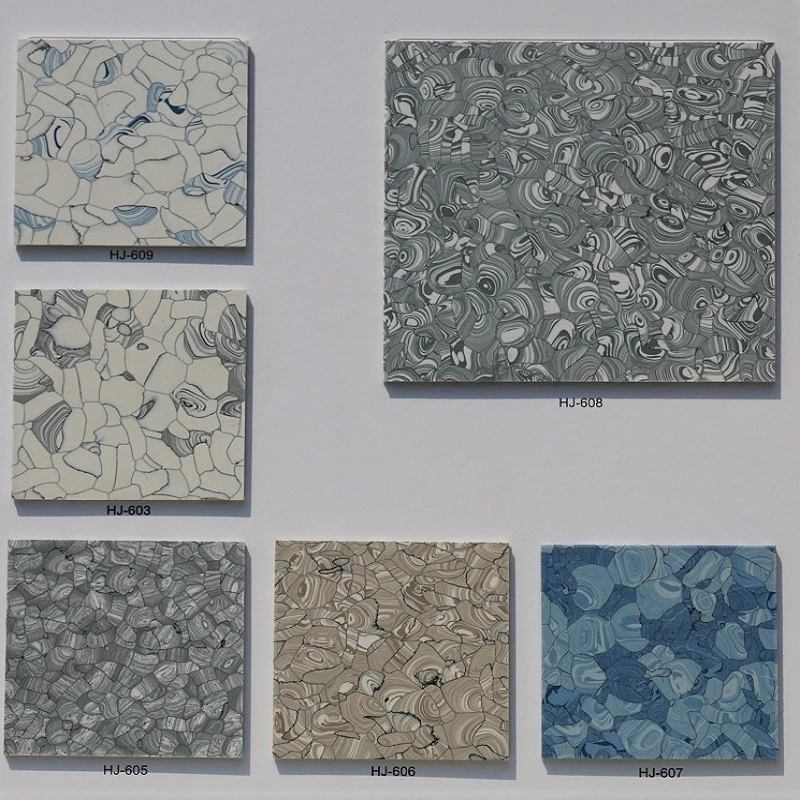
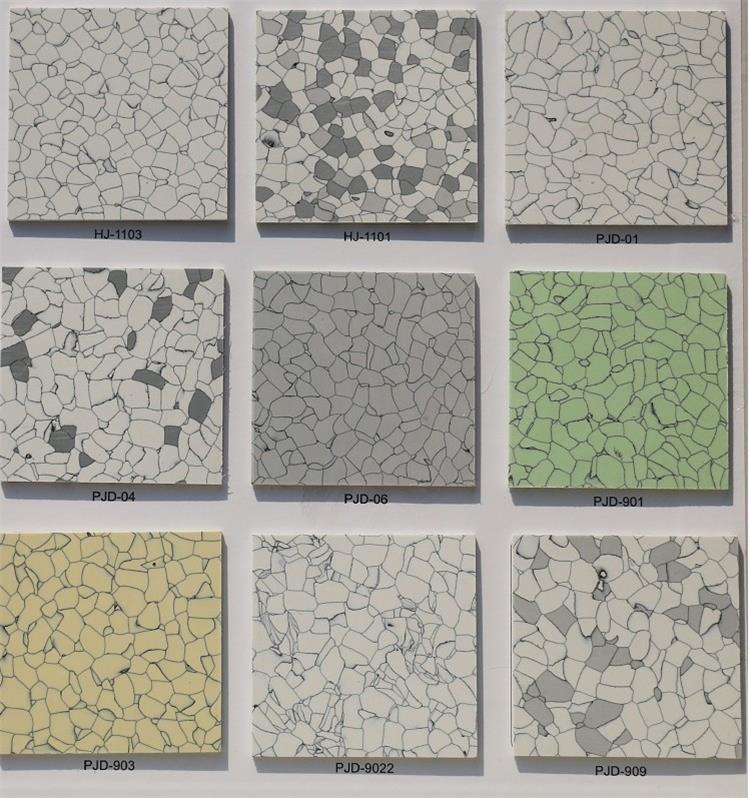
3. **By Specification:** Tile flooring comes in a wide variety of specifications, primarily categorized into plank (strip) shapes and square tiles.
4. **By Wear Resistance:** There are two types: general-purpose and heavy-duty (durable). General-purpose PVC flooring is the most commonly produced and used type in China. However, areas with extremely high foot traffic-such as airports and train stations-require heavy-duty PVC flooring; this type offers superior wear resistance and a longer service life, albeit at a higher price point.