


How can an anti-static chair ensure a good grounding
In the process of receiving customer enquiries, many customers reported that the conductivity of the anti-static chairs they purchased before was unstable. After analyzing the specific reasons, we found that most of the chairs they bought were not because of the unstable anti-static properties, but anti-static The chair is not well grounded, so static electricity cannot be discharged smoothly. How can the anti-static chair ensure a good grounding?
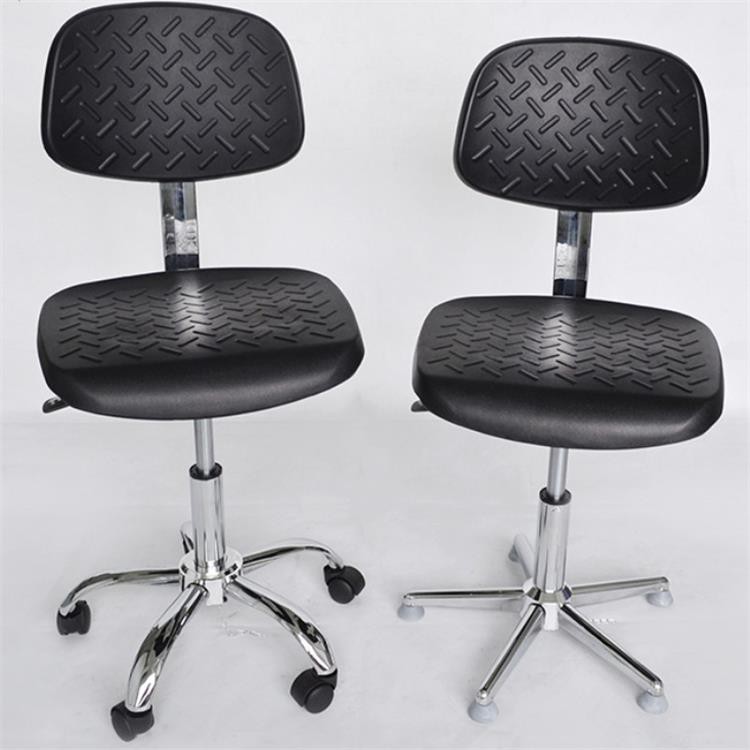


According to the requirements of ESD S20.20, the resistance value of the anti-static chair should be less than 10E9 ohms. In the ESD STM12.1 chair resistance monitoring test, it is stipulated that the resistance of the chair surface, chair back, armrest, etc. to the wheel needs to be tested, which is required to meet this requirement . If the wheel is made of insulating material, it must not meet the requirements, because the resistance of the insulating material is greater than 10E12 ohms.
To solve this problem, there are two ways: replacing the wheels, that is, replacing the wheels with conductive wheels or wheels made of dissipative materials; the other is to electrostatically ground the chair, which can be done by using a grounding chain. If you choose the latter, the chain must be connected to the chair’s conductive or dissipative material to ensure that the grounding chain really works; in addition, the chain must have a certain length to ensure that it can be grounded through the floor (emphasis here, ESD The chair must have a good ESD protection effect and must be used in conjunction with the floor. If the floor does not meet the anti-static requirements, the anti-static chair will not be effective). The test of the chair after the chain is grounded only needs to test the resistance of each part of the chair to the grounding chain to meet the requirements!