


How Effective Are Anti-Static Finger Cots in Managing Human-Body Static Electricity?
Static electricity is ubiquitous in our daily lives, often generated through processes like friction or physical impact. When two materials come into close contact and then separate, electrons are transferred from one to the other; the material that loses electrons becomes positively charged, while the material that gains them becomes negatively charged-this is how static electricity is created.
Static electricity is essentially everywhere in our daily environment. Our bodies and the surrounding space can carry high static voltages-ranging from thousands to tens of thousands of volts. While such levels may have little impact on the human body, they can significantly affect sensitive components in manufacturing environments, causing them to lose their intended performance or even fail completely. Consequently, static electricity protection is essential.

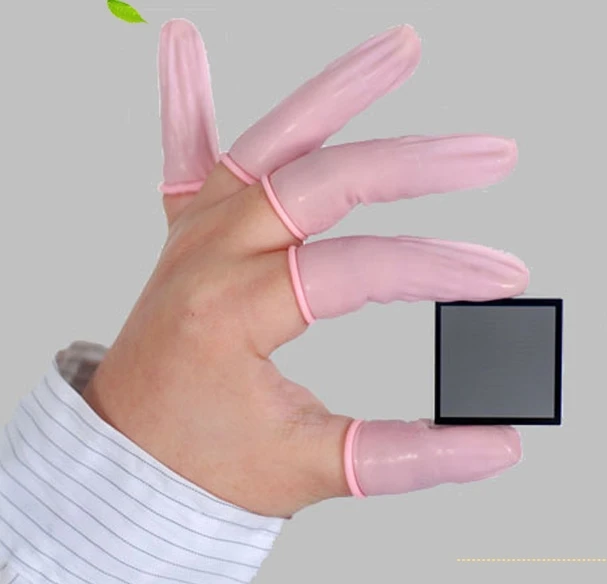
Anti-static finger cots serve as protective gear for the hands. They prevent operators from making direct contact with static-sensitive components and safely dissipate static charges carried by the human body. Furthermore, they protect products from contamination caused by sweat or dust from the operator's hands, prevent fingernails from scratching the product surface, and shield the fingertips from abrasion or exposure to toxic substances. These finger cots are manufactured using 100% concentrated natural latex combined with an anti-static conductive agent. The surface resistance value is determined by the concentration of this conductive agent; according to international standards, this value typically ranges from $10^6$ to $10^9$ ohms.
Anti-static finger cots are generally available in various colors, including beige, milky white, pink, black, and orange. They also come in textured (frosted) or smooth (non-textured) versions. Textured finger cots feature a roughened surface at the fingertip, which provides an anti-slip effect. Designed for low-dust environments, they offer high tactile sensitivity, making them ideal for tasks such as electronics assembly, lens and keyboard manufacturing, automotive production, and operations within cleanrooms. Anti-static finger cots should be replaced frequently; they must be changed whenever leaving a cleanroom. Ideally, they should be replaced every two hours.