


Do you know what types of electrostatic ion neutralization equipment are available?
As electronics factories place increasing importance on static electricity, ion neutralization equipment is being used more widely; however, do you know exactly how many types there are? Let me give you a brief overview.
1. Ionizing Blower:
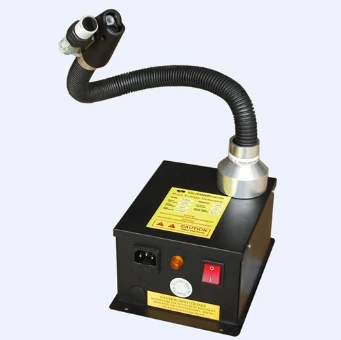
These are categorized by placement method (desktop, horizontal, or overhead/suspended) and by the number of outlets (single-head, dual-head, triple-head, quad-head, or penta-head). There are also ionizing air blowers designed for harsh environments or applications requiring rapid, wide-area static elimination. Desktop, horizontal, and single-head models can be placed on workbenches or suspended, while dual-head through penta-head models are typically suspended. Ionizing blowers operate on a standard 220V power supply and feature adjustable airflow. Due to airflow limitations, they are best suited for environments requiring low residual static voltage; however, their dust removal performance is generally less effective compared to other static elimination devices.
2. Ionizing Air Gun:
Types include standard ionizing air guns, plastic-body models, large-nozzle models, and "TOP GUN" models (high-precision guns suitable for high-grade cleanrooms). These are typically handheld devices that eliminate static and remove dust simultaneously. They require an external compressed air source, which must be free of moisture and oil (standard air compressors are usually equipped with oil and water filtration systems).
3. Ionizing Air Nozzle:
Available in standard and sensor-activated versions (which automatically blow air when an object is detected); these are typically fixed-mounted on assembly lines.
4. Ionizing Air Snake:
Similar to the ionizing air nozzle, but featuring a base and a flexible hose, allowing the airflow direction to be adjusted as needed. 5. Ionizing Air Bars:
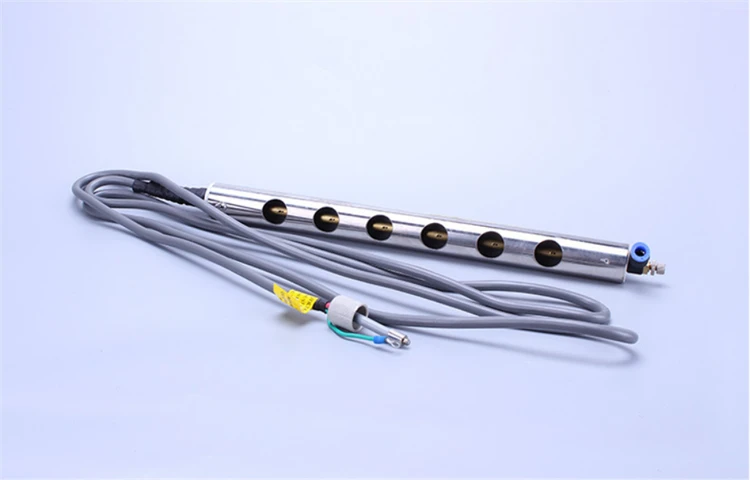
Categorized by material, these include copper bars (ionizing copper bars/air-assisted ionizing copper bars) and aluminum alloy bars (ionizing aluminum bars/air-assisted ionizing aluminum bars/ionizing air curtains). Categorized by ionization method, they include ionization-type and induction-type units; copper bars typically utilize active ionization, while aluminum alloy bars are generally induction-type. Lengths are customized to requirements, and versions are available with or without integrated airflow; they are typically installed directly onto equipment.
6. Static Elimination Nets:
These are generally installed at the air inlets located on the workshop ceiling; they are particularly suitable for cleanrooms, as they can cover the entire room. Dimensions are customized to specifications.
These six major categories essentially encompass the static neutralization equipment currently available on the market.