


How Anti-Static Fabric Works
1. What is anti-static fabric?
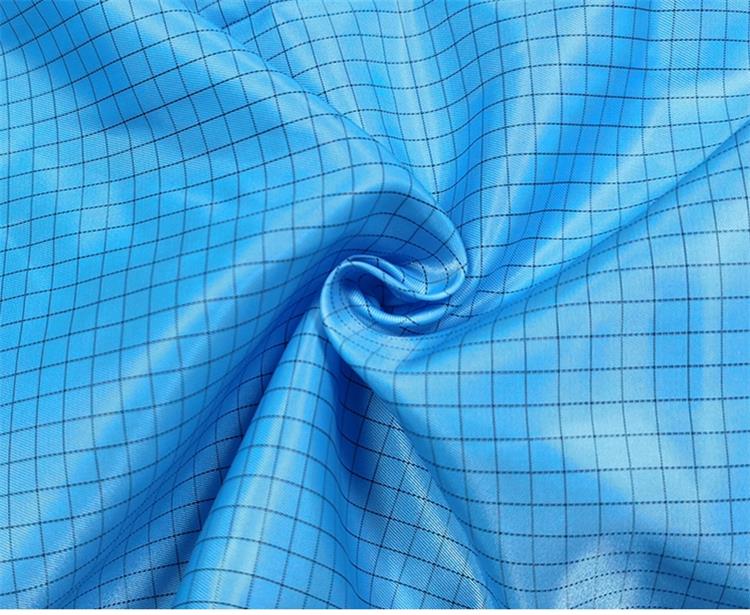
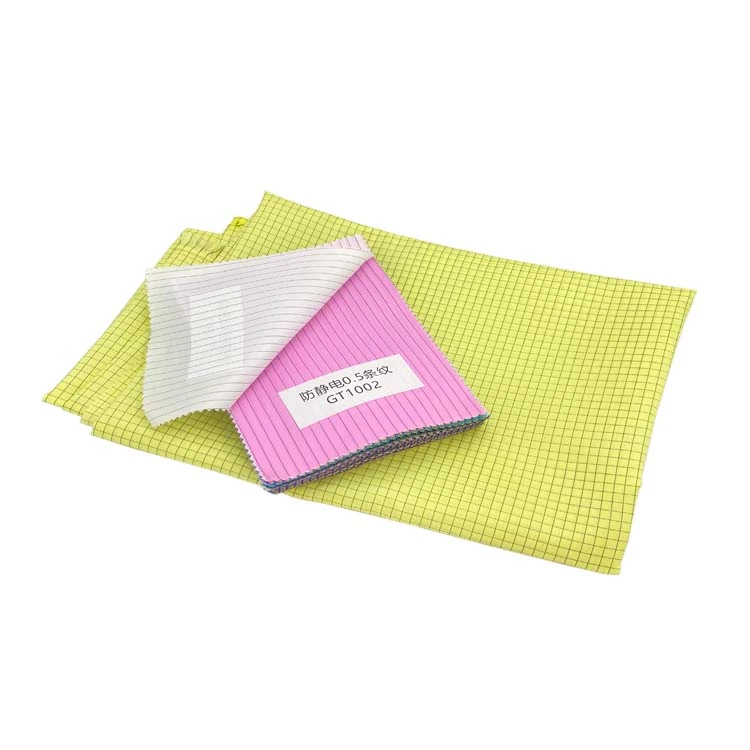
Anti-static fabric is a functional textile designed to dissipate static electricity; it is created by weaving conductive fibers evenly into the base fabric. Conductive fibers are defined as fibers made-wholly or partially-from metal, organic materials, or semi-conductive materials, possessing a volume resistivity (Pv) in the range of 10⁴ to 10⁹ ohm-cm.
Protective clothing made from this fabric typically utilizes specialized polyester filament or elastic yarn, with conductive fibers woven into the warp or weft using a unique process. Compared to garments treated with traditional anti-static agents, this fabric offers superior dust-blocking performance and significantly enhanced static dissipation. The conductive filaments do not break, and the excellent dust-blocking properties mean the garment requires less frequent laundering. It is the preferred fabric for anti-static protective clothing.
2. Characteristics and static dissipation mechanisms of anti-static workwear
Anti-static workwear made from chemical fibers blended with conductive fibers does not generate dust or shed particles, nor does it easily attract fine dust; its unique design prevents dust infiltration. Its static dissipation relies on two primary mechanisms: leakage and neutralization. When grounded, static electricity on the fabric is dissipated into the ground via the conductive fibers, in addition to being neutralized by the corona discharge from those fibers. When ungrounded, static is eliminated through the weak corona discharge of the conductive fibers. Tests demonstrate that such workwear effectively suppresses static buildup and eliminates or reduces the hazards associated with electrostatic discharge.
In contrast, conductive fabrics featuring metal coatings also provide anti-static properties due to their extremely high conductivity. Because the coating consists of a high-purity metal layer, it offers powerful anti-static performance.
3. Does anti-static clothing need to be washed?

Yes, but washing it once a week is sufficient!
1. Avoid damaging the workwear by scratching the fabric with sharp metal edges. 2. To minimize particle generation and ensure effective dust containment, the garments are sewn using a chain-stitch method; this design prevents sharp objects from snagging and breaking the thread during use or laundering, which could otherwise lead to unraveling and compromise functionality.
3. When laundering cleanroom garments, ensure all zippers are fully closed to minimize tangling and prevent damage to the zipper mechanism.
4. Secure Velcro-style fasteners using their dedicated protective strips during laundering to prevent the garment fabric from snagging or sustaining mechanical damage from the hook-and-loop material.
5. Avoid scrubbing the garments with stiff brushes, as this can damage the fabric.