


Standards and Common Terminology for Antistatic Workwear
This standard defines the quality requirements, safety performance, inspection rules, marking, and packaging of antistatic workwear. This standard applies to durable antistatic workwear worn in fire and explosion hazard areas.
1. Referenced Standards

GB 1335 Clothing Size Series
GB 2668 Men's and Women's Single-Layer Jacket Specification Series
GB 2669 Men's and Women's Single-Layer Trousers Specification Series
GB 2828 Lot-by-Lot Inspection Sampling Procedures and Sampling Tables (Applicable to Continuous Lot Inspection)
GB 3923 Determination of Tensile Strength and Elongation at Break of Woven Fabrics (Strip Method)
GB 4288 Household Electric Washing Machines
GB 4385 Safety Technical Requirements for Antistatic Rubber-Soled Shoes and Conductive Rubber-Soled Shoes
2. Common Terminology for Antistatic Workwear
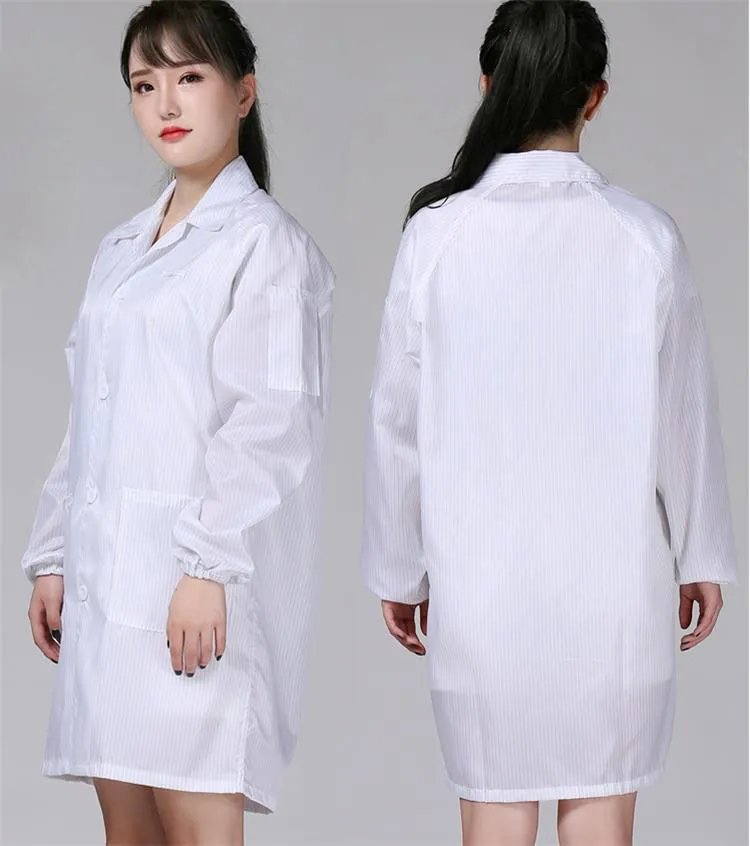
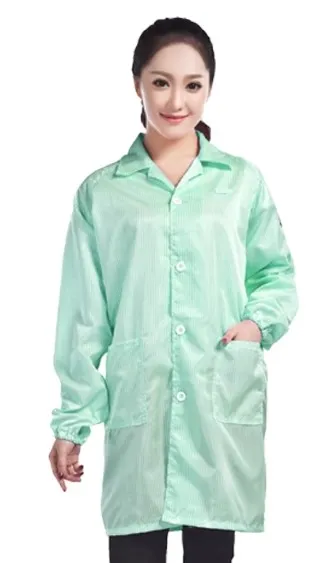
Antistatic workwear is workwear made of antistatic fabric to prevent the accumulation of static electricity.
Antistatic fabrics are fabrics made by weaving conductive fibers or antistatic synthetic fibers, or a mixture of both, into antistatic workwear to prevent static electricity buildup.
Conductive fibers are fibers made wholly or partially of conductive or semi-conductive materials, whether metallic or organic.
Antistatic workwear generally requires careful and tight stitching at the seams. The seam strength should be tested according to GB 3923, and its breaking strength should not be less than 98N. The structural design should generally be lightweight, comfortable, easy to remove, and allow for free movement. Antistatic workwear is available in sizes X, XL, XXL, and XXXL.
Metal accessories are generally not allowed on the clothing. If necessary (buttons, zippers, etc.), they must not be directly exposed when worn. The clothing should be entirely made of antistatic fabric and should not have a lining. When linings (pockets, reinforcing fabric, etc.) are necessary, the exposed area of the lining should be less than 20% of the total exposed area of the inner surface of the antistatic work clothes; if it exceeds 20% (such as for cold-weather clothing or special clothing), the face mask and lining should be detachable.