


Static eliminators: provide reliable protection for your production line
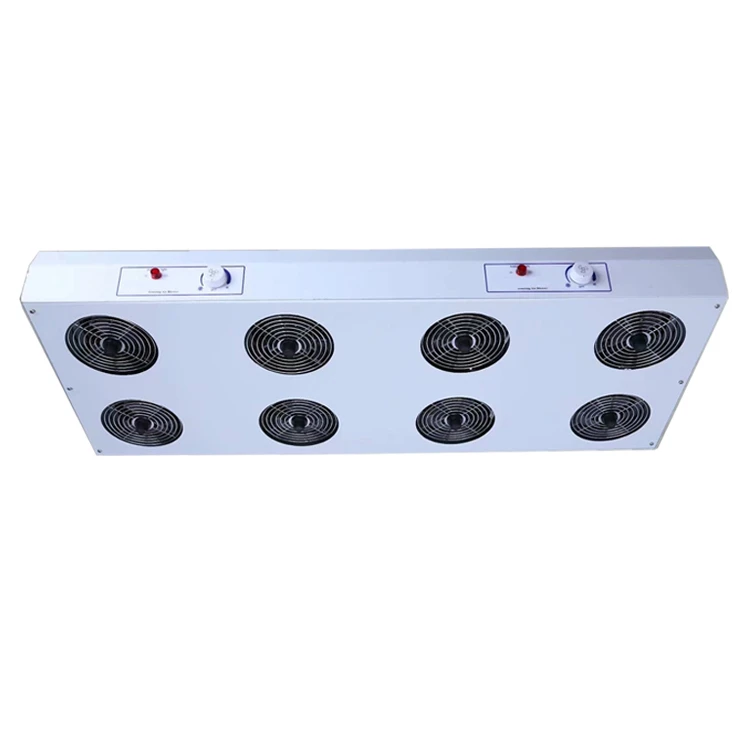


Ionic static eliminators are common in electronics manufacturing and assembly facilities. But the working process of its ionization is unknown to most people.
Today, we’re going to address the question of when you need a static eliminator and what factors determine which type of static eliminator is best for you.
First, we need to clarify what measures need to be implemented to obtain a static-free environment. For any area where static-sensitive equipment is handled, be sure to ground all conductors and remove all unnecessary insulation. This sounds easy, but actually requires a deep understanding of grounding techniques for conducting materials and methods of neutralizing charges on insulating materials.
Grounding an insulator is ineffective because the static charge will not be transferred to the ground. Passive devices such as heel straps, wrist straps, table mats, and conductive boxes protect static-sensitive equipment through direct or indirect grounding, but do not prevent static charge from building up on insulating materials. This is the job of an ionic static eliminator, as it works by ionizing the air to make the surrounding air conductive enough to dissipate static charges and neutralize static electricity on nearby surfaces.
If you must use insulators in your production process, it is especially important to use a static eliminator to neutralize static charges. For example, clean rooms require the use of static eliminators because the glass, plastic, ceramic, quartz, and silicon used in their construction—all of which are insulators. In particular, high-precision air filtration systems remove particulates but also remove the normal ion content of the air, thereby raising the static charge to even higher levels.
Charged precision instruments in clean rooms are susceptible to damage from static electricity, which attracts airborne particles to their surfaces. These two events are the leading causes of product degradation and equipment failure, and are the biggest reasons why static eliminators are needed to neutralize static charges. Other control methods, such as increasing humidity and spraying conductive chemicals in clean rooms, are not recommended because they can actually increase the likelihood of particle contamination.
In an automated production line, the only way to reduce static charge is to isolate equipment from the product, use non-insulating materials to build the machine, or eliminate any charge build-up. For production processes where insulating materials must be used, a static eliminator is a good choice because it eliminates charges from the surface of the equipment.
In many automated production lines that use non-conductive bodies and epoxy enclosures, static eliminators are installed inside the equipment to eliminate charge build-up. Any movement during these operations can cause the device to charge, and static eliminators can effectively control static charges.
Many static eliminator manufacturers will survey your work area and make recommendations to keep it static-free when you need to set up a static protection system. They will audit your production process, look at your products and determine the best static control measures for you.
These manufacturers will also offer you a few different types of ionic static eliminators to help determine which type is better for you, such as laminar flow, room, benchtop, or spot-based. They can indicate whether your production process requires an AC, steady state, or pulsed DC static eliminator. For example, some of your areas or products may require a device that can decay 1,000 V to 100 V in 1.5 seconds, but other areas may only require static elimination that works at a slower decay rate over a larger area. equipment.
To assist you with your ESD audit, your static eliminator supplier can assist you in measuring static charge changes during the manufacturing process before and after using the static eliminator. By implementing this measure, some companies have experienced an 8% increase in production in just 24 hours after installing static eliminators.
The effects of using equipment in different environments are also different. You cannot expect a survey to accurately tell you the overall effect that can be achieved after improvements. The important point is that this improvement should be as thorough as possible. Your investigation should follow these steps: measure changes in the static electricity of your manufacturing process without using an ionizer, determine which ionization method is best, implement and measure again to evaluate its effectiveness, and then make improvements.