


Uses of Anti-Static Stainless Steel Tweezers
Anti-Static stainless steel tweezers are primarily designed for handling and assembling small, delicate components that are sensitive to electrostatic discharge (ESD) or prone to rust and corrosion, or that require high-precision manipulation. They combine the inherent strength and corrosion resistance of stainless steel with specialized anti-static (ESD-dissipative) coatings or structural properties.
Primary Applications
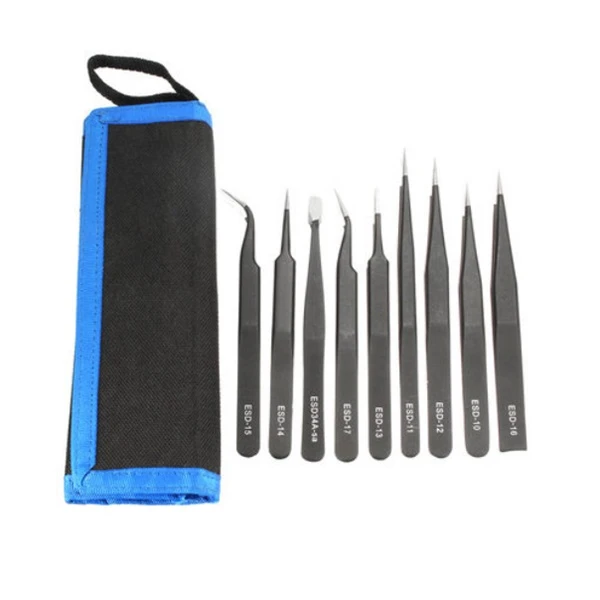
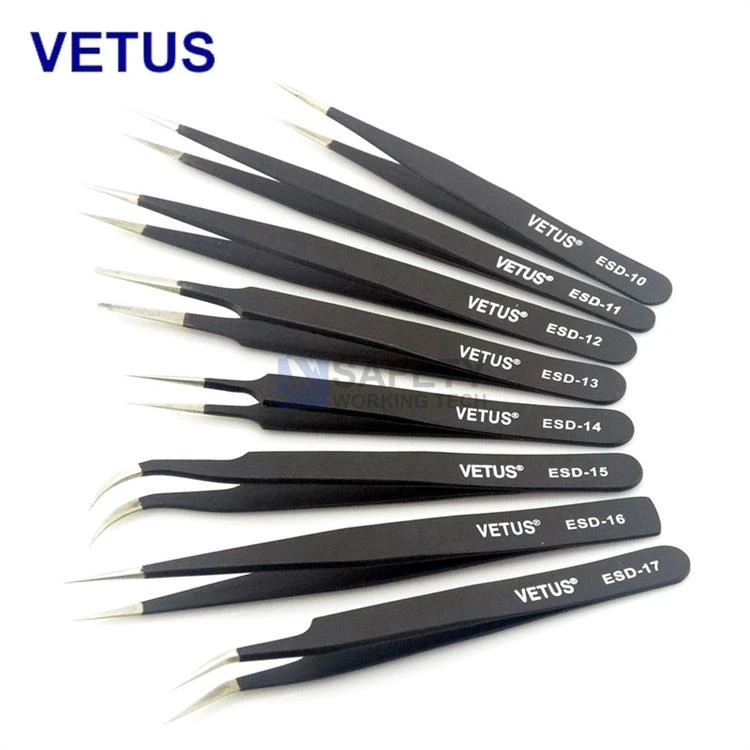
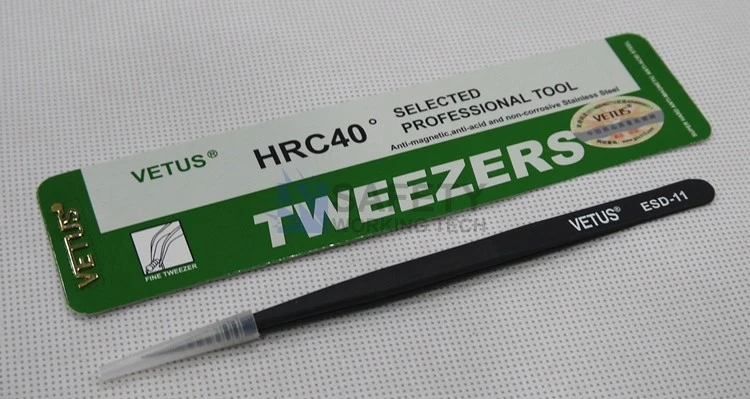
• Electronics and Semiconductor Manufacturing/Repair: Used for handling integrated circuits (ICs), chips, LED components, resistors, capacitors, computer read/write heads, and precision circuit board components. Their anti-static coatings or conductive structures safely dissipate static electricity, reducing the risk of damage to sensitive components caused by electrostatic discharge.
• Laboratory and Scientific Research: Ideal for handling small samples or precision parts in laboratory settings, or for working within confined spaces. The stainless steel construction offers excellent resistance to acids and corrosion, ensuring long-term durability.
• Precision Crafting and Detailed Tasks: Certain pointed or curved-tip models are also used for tasks requiring delicate handling, such as watch or digital device repair, model building, eyelash extensions, nail art, or placing small decorative items in journals (scrapbooking).
Usage Tips
• Distinguishing Between Standard and Anti-Static Types: Standard conductive stainless steel-lacking a proper anti-static coating or a designed ESD-dissipation path-may pose a risk by allowing static electricity to discharge too rapidly when touching sensitive components. When purchasing for electronics-related work, ensure the tools are specifically rated for anti-static (ESD) performance.
• Selecting Based on Tip Shape: Pointed tips are best suited for tiny components and narrow gaps, while curved tips facilitate gripping at specific angles.