


Working Principle of the Ion Air Gun
An ion air gun (also known as a static elimination gun) is a handheld tool commonly used in industries such as electronics and semiconductors to remove dust and eliminate static electricity. Its primary purpose is to rapidly neutralize static charges on an object's surface while simultaneously blowing away dust.
Core Working Principle:

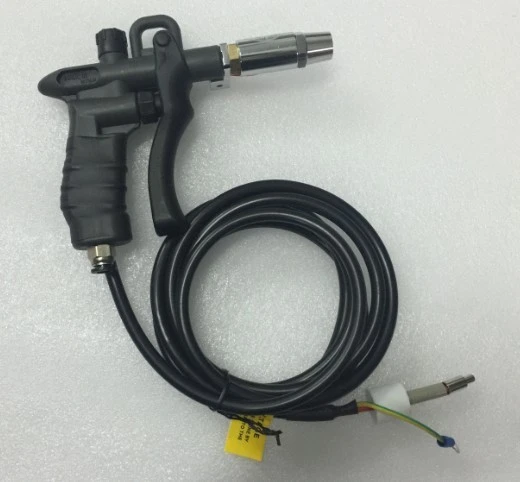

Ionization and Neutralization: The operation of an ion air gun involves two main steps: generating ions and neutralizing static electricity. High-voltage air ionization: High voltage is applied to the gun's nozzle (the emitter pin). Utilizing the principle of tip discharge (corona discharge), the high-voltage electric field ionizes air molecules, generating a large number of positive and negative ions. High-speed airflow transport and neutralization: Compressed air from an external source (or air driven by a built-in fan) is introduced into the gun body, creating a powerful stream of air. This airflow carries the generated positive and negative ions toward the target surface. If the surface carries a negative charge, the positive ions in the airflow combine with it; if the surface carries a positive charge, the negative ions in the airflow neutralize it. Through this process, the positive and negative charges cancel each other out, thereby eliminating static electricity from the surface.