


Cleanrooms are crucial for high-tech development.
With the development of high-tech industries, microelectronics has become the leading and foundational technology for various cutting-edge technologies and emerging industries worldwide. The increasing precision of products, such as the reduction in integrated circuit area and the miniaturization of component circuitry, leads to lower voltage withstand values and weakened electrostatic discharge (ESD) resistance. ESD and ESD currents become deadly threats to these high-density components. The increasing integration and complexity of ICs have constrained the development of microelectronics technology due to limitations in pollution control, environmental protection, and ESD protection technologies.
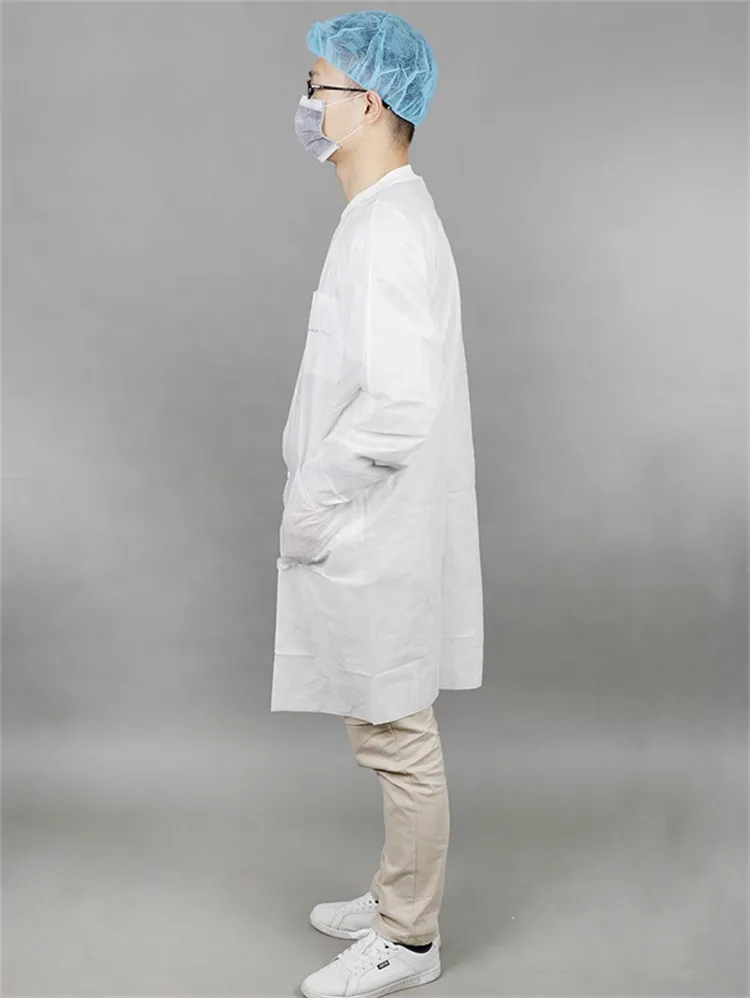



Cleanroom pollution control has become critical. Cleanroom protective clothing, gloves, wipes, shoes, and paper are widely used and essential in cleanrooms. Cleanroom protective clothing is dust-free and has excellent dust filtration properties. Dust-free hook and loop fasteners prevent lint from contaminating the environment. Conductive fibers are used in the sewing to maintain electrical continuity throughout the garment; the sleeves and trousers feature a unique double-layer structure to meet the requirements of a cleanroom environment.
Dust in cleanrooms primarily originates from the airflow and human movement within the room. Once the equipment conditions are determined, improving cleanliness means controlling the tiny dust particles generated by the human body within the clothing to the greatest extent possible, allowing them to pass through the fabric and enter the air to achieve the desired effect.