


How does the surface resistance tester measure static electricity
Surface resistance tester, as its name implies, is mainly used to test the surface resistance value of objects. It is currently widely used in microelectronics, food, biological engineering, medicine, aerospace, precision machinery and other fields. So how does the surface resistance tester measure static electricity?
Instructions for use:

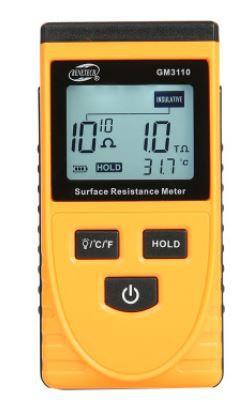

Simply place on the surface of the object to be measured and press the red button. The indicator light range on the instrument is 10 ^ 3 ~ 10 ^ 12Ω, and one of the LED lights will light up according to the test value. This instrument can be used to measure the surface specific resistance (surface resistivity) of various fabrics, carpets, films, and other insulating materials. The surface specific resistance can indirectly reflect the length of static leakage time on the surface of the test material, and thus reflect the static electricity of the test material. performance.
There are many models and brands of surface resistance testers. In order to more accurately measure the resistance value of the surface of the object, it is recommended that you choose a tester with a voltage selection key. Such instruments will have better accuracy and accuracy.
Many domestic joint ventures and sole proprietorship companies use the standards of the International Electrotechnical Commission. In order to move closer to international standards, adapt to the requirements of international advanced electrostatic protection technology, and improve the integration of our national standards with international standards, our industry standard SJ / T10694-2006 "Electronics The General Specification for Antistatic Testing of Product Manufacturing and Application Systems "equally adopts the test voltage regulations in IEC61340-5-1. If the user does not propose safety requirements for insulation resistance, we should perform the above test procedures when conducting resistance tests.