


Regarding Static Electricity Measurement and Anti-static Measures
Generally, static electricity is generated due to contact and separation, deformation, ion adhesion, radiation, state changes, and chemical changes on the surface of objects. Static electricity causes mechanical actions (attraction and repulsion), electrostatic induction, and discharge phenomena, represented by Coulomb force, and has been a cause of interference and harm since ancient times. Especially recently, with the advancement of semiconductor technology, semiconductor components such as GMR heads of hard drives are very easily damaged by static electricity, making anti-static measures a top priority.
Commonly used anti-static (ESD) products in factories are mainly divided into four categories: personal protective equipment, workshop environmental equipment, packaging and handling, and equipment and static elimination. Their core function is to prevent the generation of static electricity, accelerate the discharge of static electricity, or neutralize static electricity to protect sensitive electronic components or prevent flammable materials from exploding. For example:
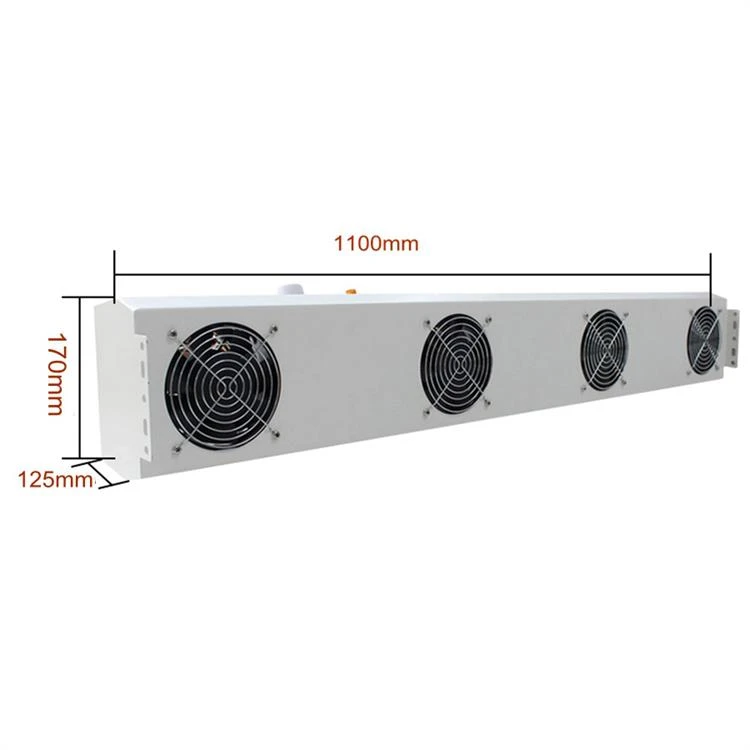
Ionizing blowers/ionizing guns: These use high-voltage ionization of air to generate positive and negative ions, which are blown onto the surface of objects to neutralize static electricity on insulators.

Anti-static wrist straps/ankle straps: Connected to the ground through a grounding wire, this is the most direct and basic way for the human body to discharge static electricity.