


How high voltage can esd anti-static rubber mat withstand?
Anti-static rubber, as a safety protection product to prevent electrostatic hazards, was mainly used in the electronic processing industry before its application field was continuously expanded, especially in the processing of small components that would cause short circuits or even burn out if the voltage was slightly higher. And often these links themselves need electricity. Due to its product properties, the anti-static rubber cannot be completely insulated. Once leakage occurs in the environment where the anti-static rubber is laid, there will inevitably be hidden dangers of electricity safety. So how can we ensure the normal operation of the anti-static rubber? Can you guarantee the safety of electricity use?


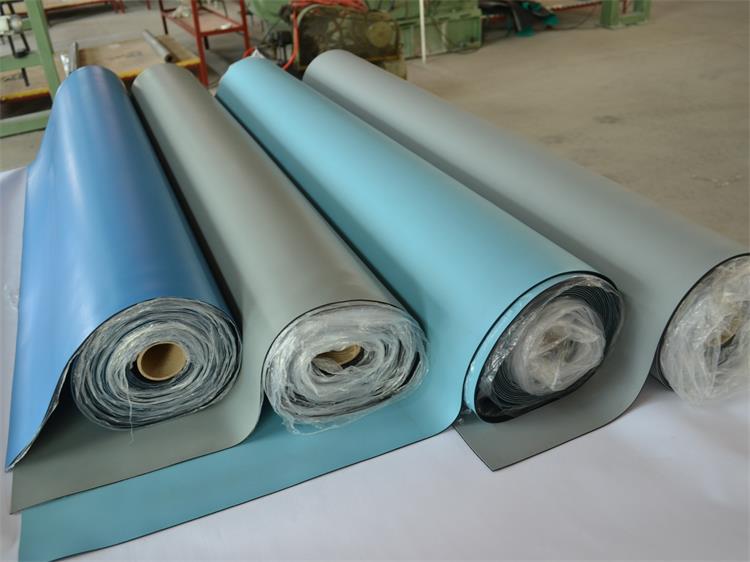

The anti-static rubber meets the basic requirements that the resistance of the upper layer is between 1*106~1*109 ohms, and the resistance of the lower layer is less than 1*106 ohms. At the same time, the resistance of the lower layer is greater than 1*103 ohms, which ensures the safety of electricity under 380V voltage. At the same time, taking our original rubber-quality anti-static rubber as an example, the breakdown voltage of the anti-static rubber with a thickness of 3mm is above 1KV, and the breakdown voltage of the anti-static rubber with a thickness of 5mm is above 2KV. That is to say, if there is a high-voltage leakage, The anti-static rubber with a thickness of 3mm can protect the safety of personnel in an environment below 1KV, and the anti-static rubber with a thickness of 5mm can protect the safety of personnel in an environment with a voltage below 2KV.
As a safety protection product, on the basis of preventing static electricity, the anti-static rubber should be able to provide corresponding safety guarantees for the personnel in its use environment, and continuously improve its own quality in order to meet the increasing demands of customers in the use process. Actual demand.