


Principles of Static Dissipation in Anti-Static Clothing
Anti-static clothing is a common sight in our daily lives, but how exactly does it eliminate static electricity? What are the underlying principles?

(1) Anti-static esd clothing refers to workwear sewn from anti-static fabric designed to prevent the accumulation of static electricity on the garment. Anti-static fabric is produced by blending conductive fibers, anti-static synthetic fibers, or a mixture of both into the textile at roughly equal intervals or uniformly during the weaving process.

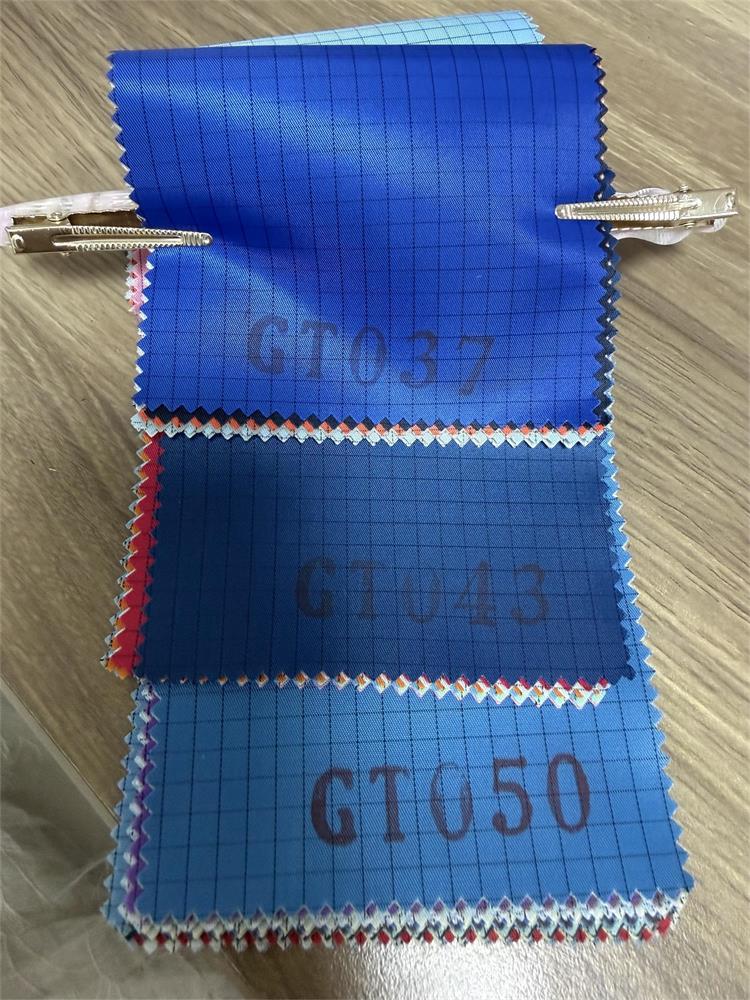
(2) Conductive fibers are a general category of fibers made wholly or partially from conductive or semi-conductive materials (such as metals or organic substances), with a volume resistivity (ρv) ranging from 10⁴ to 10⁹ Ω·cm. Based on the distribution of conductive components within the fiber, they can be classified into three types: homogeneous (uniform distribution), coated (conductive component on the surface), and composite (conductive component integrated within the fiber structure). Currently, the vast majority of anti-static fabrics utilize conductive fibers, with the composite type-specifically composite fibers-being the most widely used.
(3) For anti-static workwear made by incorporating conductive fibers into chemical fiber fabrics, static dissipation relies on two mechanisms: charge leakage and charge neutralization. When grounded, static electricity on the fabric is neutralized through corona discharge from the conductive fibers and also dissipated into the ground via these fibers; when not grounded, static electricity is eliminated through the weak corona discharge of the conductive fibers.