


How to ensure the cleanliness and anti-static performance of clean clothes
Fine dust and static electricity have become important factors affecting the quality of electronic products. In order to strengthen the dust and static control of the clean room, attention must be paid to the cleanliness and electrostatic performance of dust-free work clothes.
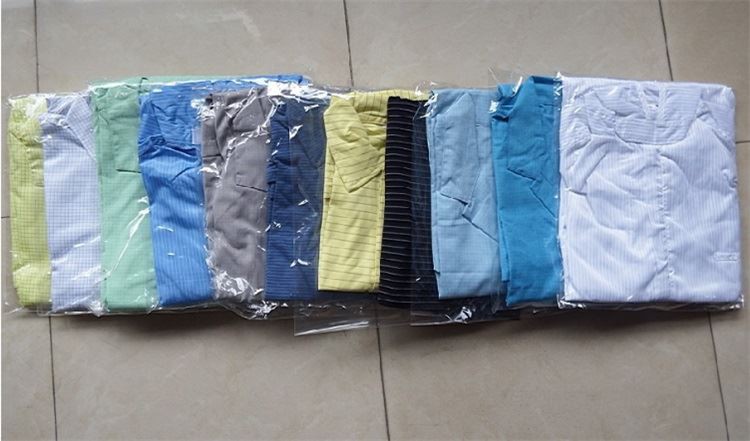


1. The material requirements for clean dust-free clothing (including hats and masks) are:
(1) Less dust, not easy to peel off or break the wire;
(2) It is difficult to generate static electricity and attached particles;
(3) Resistant to organic solvents, cleaning and steam sterilization;
(4) No mildew. Clean and dust-free clothes must cover all hair, beards and feet to prevent the body from falling to the maximum.
Second, the standard process for cleaning dust-free clothes:
(1) Sorting: After receiving clean and dust-free clothes from customers, they are sorted first, and then stored in plastic boxes with lids to prevent increased pollution.
(2) Pretreatment: The use of dust-free clothing will cause some damage and deformation. Pre-sterilize special dirty clothes that need to be cleaned.
(3) Dust-free cleaning: Clean the pre-treated dust-free clothes in the non-control area with a washing machine with a special channel structure, and then enter the control area (clean room). In the final rinse, an antistatic agent can be used to improve the antistatic performance, but the antistatic agent should be fully combined with the fiber without falling dust. In order to remove water-soluble contaminants, after washing with water, a final wash with distilled solvent is used to remove oily contaminants. The dry and wet clean water should be filtered, and the solvent should be distilled. When using, please use a filter membrane with a pore size of less than 0.2μm, and filter several times as needed.
(4) Dust-free drying: The cleaned antistatic and dust-free clothes should be dried in a clean air circulation system specially used for washing (the dry hot air used has been filtered by HEPA).
(5) Folding inspection: After drying, fold it in a clean room specially used for cleaning, and then put it in a clean polyester bag or nylon bag. It can be double-packaged or vacuum sealed as required. The packaging material is preferably a material with good antistatic properties. Because the folding process is most susceptible to dust, the folding process must be performed in a high-level clean room. For example, folding and packaging 100 layers of dust-free clothing should be carried out in a 10-layer environment.
(6) Cleanliness test: Helmke drum testing machine can test the number of cleanliness level dust particles on clean, anti-static and dust-free clothing.
(7) Anti-static test: Check the anti-static performance to ensure the anti-static performance of dust-free clothing.
(8) Purification packaging: anti-static and dust-free clothing that has been inspected, sealed, and packaged in a vacuum packaging bag is a qualified product.
Dust and static electricity in the clean room are extremely harmful to the product. Clean and dust-free clothes can reduce the pollution of dust to the human body and prevent static electricity. Therefore, clean clothes must undergo rigorous testing in the clean room.