


Static Electricity Issues and Solutions in the Textile Industry
During textile production, static electricity and dust can significantly compromise product quality. In dry air, static electricity tends to accumulate; friction between machinery and yarn generates even more static, disrupting production. Common issues-such as yarn breakage, the generation of "fly" (loose fibers), and yarn entanglement-reduce both production efficiency and product quality. Therefore, the rapid and effective elimination of static electricity is essential for ensuring the quality of textile products.
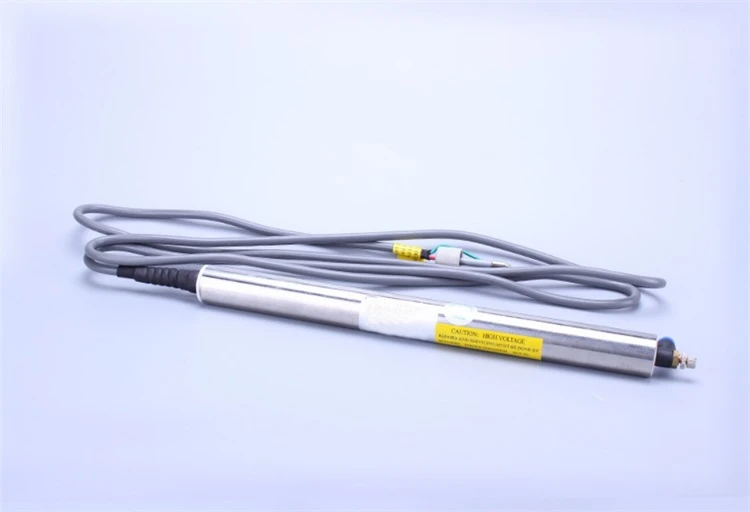
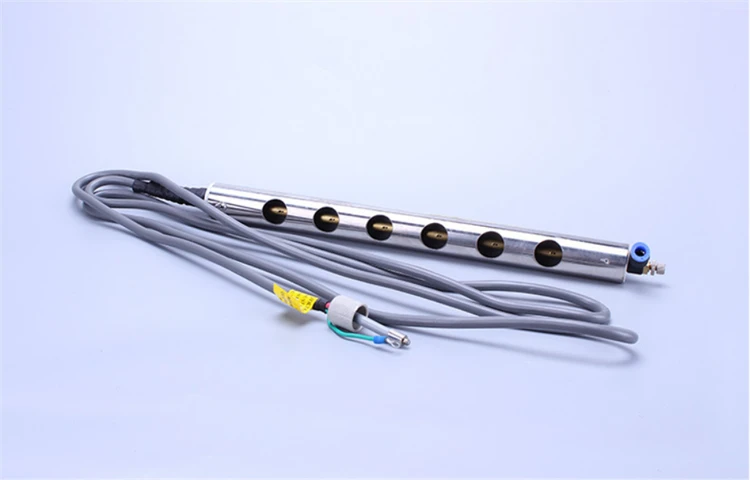
A common method for static control involves the use of "static elimination bars" (ion bars). These devices generate positive and negative ions, which help dissipate static charges on materials. The ion bar produces a stream of positive and negative ions, which are propelled at high speed by compressed air. When an object's surface carries a negative charge, it attracts the positive ions from the airflow; conversely, if the surface carries a positive charge, it attracts the negative ions. This process neutralizes the static charge on the object's surface.
1. Static Elimination for Textile Carding Machines
Issue: During the carding process, static electricity causes fibers to adhere tightly to the upper and lower rollers, leading to frequent entanglement and difficulty in forming a sliver. This severely impacts the quality of the yarn or fabric and can even disrupt the production process.
Solution: Install a static elimination bar 500 mm above the conveyor belt.
2. Static Elimination for Warping Machines
Issue: Yarn moving at high speeds accumulates a significant static charge, which can cause the yarn to tangle, repel, or break.
Solution: Install an ion-bar static eliminator above the yarn after the warping process to neutralize the static charge.
3. Static Elimination for Creels
Issue: During processing, yarn generates static electricity, which attracts dust. This results in uneven yarn (irregularity), increased yarn breakage, and a higher frequency of yarn defects.
Solution: Each layer of yarn passing through the creel should undergo static neutralization; this is best achieved by installing ion-bar static eliminators in a staggered (stepped) configuration. 4. Static Elimination for Winding Machines
Problem: Static electricity causes yarn to become fuzzy and eventually break, which prevents the two-for-one twisting process from being carried out.
Solution: Install an ion-bar static eliminator to neutralize the static electricity.
5. Static Elimination for Inspection Machines
Problem: As fabric is unwound and passes over the inspection table, static electricity is generated, causing the fabric to stick to the table and potentially delivering electric shocks to the inspection personnel.
Solution: Use an ion-bar static eliminator at the point where the fabric leaves the inspection table to neutralize static electricity, thereby preventing electric shocks and ensuring the fabric does not adhere to the table.
6. Static Elimination for Stenter Setting Machines
Problem: As fabric moves through the machine, rising temperatures and friction against rollers generate significant amounts of static electricity, leading to fabric adhesion issues and electric shocks.
Solution: Install a static elimination bar 100–500 mm above the center of the fabric to neutralize the static charge. If static electricity is present on both sides of the fabric, static elimination bars should be installed on both sides.
Product Recommendation
SL-006C Stainless Steel Static Elimination Bar