


The difference between clean clothing fabrics and ordinary antistatic fabrics
The fabric for making dust-free clothes must be anti-static, and the difference from ordinary anti-static fabrics mainly lies in the concept of "dust-free". The dust-free clothing fabric must have the following three characteristics at the same time:
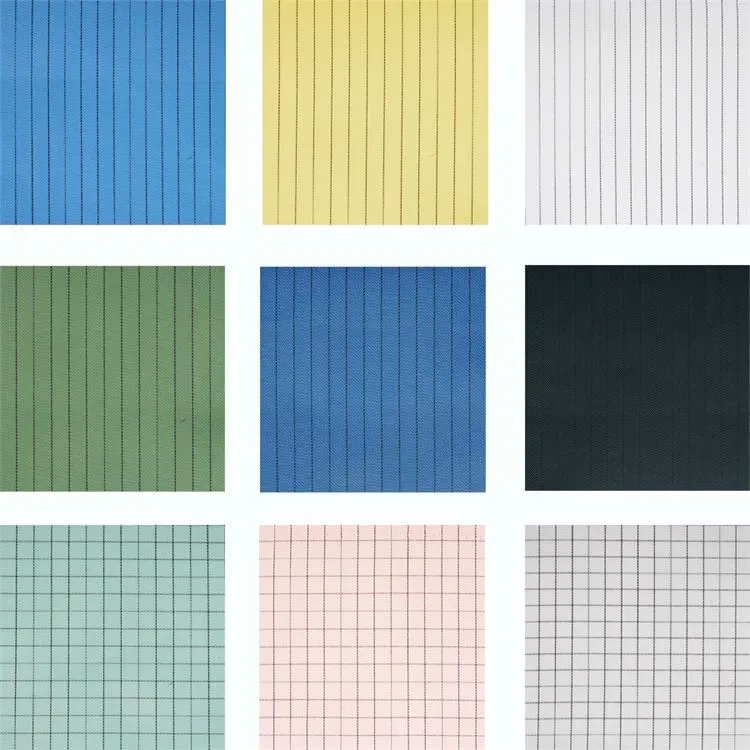


1. The dust-free clothing fabric has anti-static function: static electricity will attract dust and make the absorbed dust difficult to be blown away when the wind is drenched. Therefore, the primary feature of the dust-free clothing fabric is anti-static properties. At the same time, this antistatic performance must be durable and efficient, and will not be significantly attenuated by daily washing and friction;
2. The dust-free clothing fabric itself does not emit dust: because it is worn in a dust-free purification workshop, it is required that the fabric cannot become a dust source in the dust-free purification workshop. Long fibers are produced. Natural short fibers such as cotton, hemp, and silk cannot be applied to dust-free fabrics, although these raw materials can make the fabric more comfortable. At the same time, it is required that the selected chemical fiber filaments also strictly control the amount of dust generated. Generally speaking, fully matt polyester filament is not suitable for weaving clean clothing fabrics. Because the matting agent added in the production of polyester-titanium dioxide will become a source of pollution;
3. The dust-free clothing fabric must have good dust-filtering properties: the dust in the dust-free purification workshop mainly comes from the air flowing in the room and the human body moving in the room. When the equipment conditions are determined, improving the cleanliness means that the fine dust generated by the human body should be controlled in the clothes to the maximum, and let it pass through the fabric and enter the air. This is the so-called fabric filter rate is higher. Increasing the dust filtration rate is at the expense of the breathability of the fabric, so knitted fabrics and woven fabrics that are more loosely woven are not suitable for dust-free purification workshops.
Identification method of antistatic fabric
If you suddenly receive a piece of fabric provided to you by a supplier, how do you know if it has anti-static function? If you still lack some standard testing standards, I would like to share with you the following simple methods, it can help us Better measure its true and false and its advantages and disadvantages.
1. Warp and Weft Density: Use the warp and weft density mirrors on the market to measure the warp and weft density of the fabrics respectively and compare them;
2. Measuring resistance: choose the one with smaller resistance, if the resistance is the same, choose the one with more stable resistance value;
3. Check the conductive fiber: cut the fabric with scissors and separate the black conductive fiber, select the rougher one for the surface resistance;
4. Look at the structure of the microscope: see if the fibers are arranged neatly and whether the tightness is consistent. If they are inconsistent, it means that some fiber chicks are easy to sand. Look at the small gaps between the fibers. If the gap is too large, the dust filtration rate is high, and vice versa;
5. Compare fabric process parameters: require suppliers to provide basic fabric parameters.
To sum up, the difference between the dust-free clothing fabric and the ordinary anti-static fabric, the fabric for making the dust-free clothing must be anti-static, and the difference from the ordinary anti-static fabric is mainly the concept of "dust-free". When we use the above methods, the identification of anti-static fabrics is for us, Xiao Lai is a piece of cake. I hope you can remember these methods so that you can effectively deal with other anti-static fabrics.